


Employee retention has become one of the most significant challenges facing organisations today. As workforce expectations continue to evolve and organisations navigate growth, transformation, and increasing competition for talent, retaining great people requires more than competitive pay or benefits alone.
The organisations that retain talent most successfully are often those that create environments where employees feel valued, supported, and connected to a meaningful purpose. Retention is rarely the result of one programme or policy. Instead, it is built through culture, communication, leadership, and the everyday experiences that shape how employees feel about their work.
Building Trust Through Change
Organisational change is rarely comfortable. Whether it comes in the form of growth, acquisitions, restructuring, new ways of working, or changing business priorities, periods of transformation can create uncertainty for employees. Even when change is necessary and ultimately positive, employees often want reassurance that they understand what is happening, why it is happening, and what it means for them.
This is where communication becomes critical. Employees do not expect leaders to have all the answers immediately. What they do expect is transparency. They want honesty about challenges, clarity around decisions, and confidence that they will not be left behind as the organisation evolves. When communication is absent, uncertainty tends to fill the gap. Assumptions are made, rumours emerge, and trust can quickly begin to erode.
For organisations navigating significant transformation, bringing employees along on the journey is often just as important as the change itself. This has been particularly relevant for Lennox. In recent years, the organisation has experienced acquisitions, significant growth, and the challenge of integrating new teams while maintaining a consistent culture. While systems, processes, and structures can often be implemented relatively quickly, building connection, trust, and alignment across people takes considerably longer.
Throughout these periods of change, Lennox has placed a strong emphasis on communication and visibility. Regular all-hands meetings, ongoing engagement surveys, and open conversations with employees have helped create opportunities for feedback and discussion during times when uncertainty could easily take hold. Rather than viewing communication as something reserved for major announcements, Lennox has focused on creating a consistent dialogue that helps employees understand both the direction of the business and the role they play within it.
%20-%20USE/CTAs/BLOG%20QUOTE%201.jpg?width=438&height=438&name=BLOG%20QUOTE%201.jpg)
That observation speaks to a broader reality facing organisations today. Employees are increasingly evaluating their workplace experience as a whole. They want to understand the direction of the business, feel confident in leadership decisions, and believe they have the support needed to succeed. When those foundations are present, employees are often more willing to embrace change because they trust the organisation's intentions.
Equally important is ensuring employees understand why change is happening in the first place. Organisational growth often requires businesses to rethink structures, responsibilities, and ways of working. While these decisions may make sense strategically, they can be difficult for employees if they feel disconnected from the process.
%20-%20USE/CTAs/BLOG%20QUOTE%201%20(1).jpg?width=439&height=439&name=BLOG%20QUOTE%201%20(1).jpg)
Employees are far more likely to engage with change when they understand the rationale behind it. Communication is not simply about sharing information, but about creating understanding. It is about helping people see how they fit into the future of the organisation and giving them confidence that they remain part of that journey.
Trust is built through consistency. Employees pay close attention to whether leaders follow through on commitments, whether organisational values are reflected in decision-making, and whether actions align with what has been communicated. Retention becomes stronger when employees feel they can rely on leadership not only during periods of stability, but also during periods of uncertainty.
As organisations continue to navigate changing market conditions and workforce expectations, this relationship between communication, trust, and retention is likely to become even more important than it already is. Employees may not always welcome change, but they are far more likely to support it when they feel informed, included, and respected throughout the process.
Employee Voice Creates Stronger Organisations
One of the most significant shifts taking place across workplaces is the growing expectation that employees should have a meaningful voice in shaping their experience. The traditional model of leadership making decisions and communicating them downward is becoming increasingly difficult to sustain in modern organisations. Employees want to contribute. They want to share ideas. They want opportunities to influence the way their organisations evolve.
This is particularly important when considering retention. Employees are more likely to remain committed to organisations where they feel heard. When people believe their opinions matter and their experiences are valued, they often develop a stronger sense of ownership and connection to the organisation. Conversely, when feedback disappears into a void, employees can quickly become disengaged.
Listening, however, is only the starting point. Many organisations have no shortage of feedback mechanisms. Surveys, pulse checks, focus groups, listening sessions, and engagement initiatives are now common features of organisational life. The real challenge lies in what happens afterwards. Employees increasingly expect organisations to act on what they hear and demonstrate that feedback leads to meaningful change.
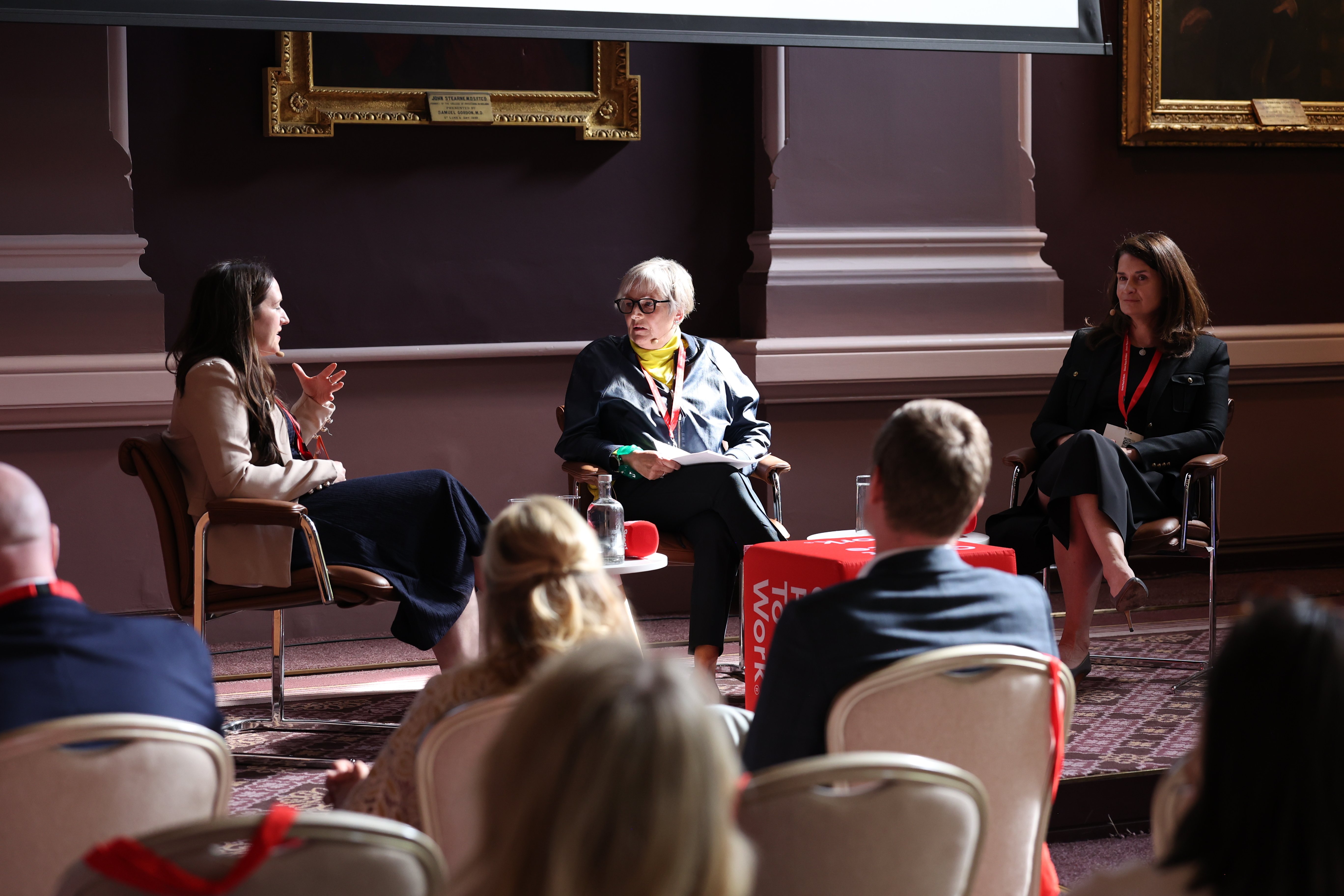
For Sarah Downing, Chief People & Capability Officer of EirGrid, creating a strong employee experience begins with understanding what employees are already saying.
%20-%20USE/CTAs/BLOG%20QUOTE%201-1.jpg?width=442&height=442&name=BLOG%20QUOTE%201-1.jpg)
As EirGrid continues through a period of rapid growth, listening has become an important way of understanding how employees are experiencing that transformation. Growth creates opportunities, but it also introduces complexity. New structures emerge, onboarding requirements increase, communication challenges become more pronounced, and employee needs continue to evolve. Listening helps organisations stay connected to those realities and identify where additional support may be needed.
Importantly, EirGrid's approach extends beyond simply gathering feedback. Employees are actively involved in shaping solutions. Following feedback from employees, the organisation introduced employee engagement groups focused on specific areas of the employee experience, giving employees an opportunity to contribute ideas and help drive improvements. Staff also established an internal newsletter to improve communication and create greater visibility across the organisation, while innovation groups were created to encourage collaboration and provide employees with a platform to share ideas and influence change. By involving employees directly in these initiatives, EirGrid has sought to ensure that employee voice becomes an active part of decision-making rather than a periodic exercise in feedback collection.
These examples highlight an important shift in how organisations think about employee engagement. Increasingly, engagement is not something that is delivered to employees. It is something that is created with them.
Employees do not necessarily expect every suggestion to be implemented, nor do they expect every challenge to have an immediate solution. What they do expect is evidence that their perspectives are being considered and that leaders are genuinely interested in understanding their experience.
At Lennox, employee feedback has become an important part of shaping organisational improvements and strengthening communication between leadership and employees.
%20-%20USE/CTAs/BLOG%20QUOTE%201%20(8).jpg?width=440&height=440&name=BLOG%20QUOTE%201%20(8).jpg)
For Brett, one of the greatest benefits of Great Place to Work® has been creating a structured way for employee feedback to influence decision-making through their Great Place to Work® team. By maintaining a close connection to the day-to-day experiences of employees, the team helps ensure that employee voice remains part of organisational conversations and that initiatives are focused on the areas that matter most to people.
When organisations create opportunities for employees to contribute, collaborate, and influence change, they often strengthen something far more valuable than engagement scores. They strengthen trust, ownership, and a shared sense of responsibility for the organisation's future. Those feelings can become powerful drivers of long-term commitment.
Purpose Gives People a Reason to Stay
While retention is often discussed in practical terms, one of the strongest drivers of long-term commitment is often emotional rather than transactional. Employees want opportunities to develop, competitive compensation, and flexibility that supports their lives, but they also want to feel that their work matters. They want to understand how their role contributes to something larger than themselves and why the work they do every day is important.
This has become increasingly significant as organisations compete for talent. Employees today have more choice than ever before. They can compare opportunities, explore different career paths, and move between organisations more easily than previous generations. In that environment, purpose can become a powerful differentiator.
Purpose creates connection. It helps employees understand not only what they are doing, but why they are doing it. It provides context during periods of change and can create a stronger sense of belonging when organisations are growing rapidly.
This has been particularly important for EirGrid. Over recent years, the organisation has experienced extraordinary growth, expanding from approximately 400 employees and continuing to scale as Ireland's energy infrastructure evolves. Such rapid growth creates opportunities, but it also presents challenges. As organisations become larger and more complex, maintaining a strong culture becomes increasingly difficult. Employees can feel further removed from decision-making, new hires can struggle to integrate into established teams, and leaders must work harder to ensure people remain connected to the organisation's mission.
%20-%20USE/CTAs/BLOG%20QUOTE%201%20(3).jpg?width=461&height=461&name=BLOG%20QUOTE%201%20(3).jpg)
As EirGrid's profile has grown, the organisation has worked to strengthen its employer brand and communicate the impact employees can have through their work. For many candidates, the opportunity to contribute to something that will shape Ireland's future is a compelling proposition, highlighting how a strong employer brand can help organisations attract people who connect with their purpose and values. For existing employees, it provides a reason to remain engaged during periods of transformation and change.
Purpose also has an important role to play in creating alignment. When employees understand the broader mission of an organisation, it becomes easier to connect individual contributions to organisational outcomes. People are often more willing to adapt, learn new skills, embrace change, and support new initiatives when they understand how those efforts contribute to a larger goal.
Importantly, purpose is not something that can simply be written into a mission statement or displayed on a wall. Employees experience purpose through their day-to-day work. It becomes visible through leadership decisions, organisational priorities, and the stories employees tell about their experiences.
%20-%20USE/CTAs/BLOG%20QUOTE%201%20(5).jpg?width=461&height=461&name=BLOG%20QUOTE%201%20(5).jpg)
Employees who feel connected to their work often bring greater energy, enthusiasm, and commitment to what they do. They are more likely to advocate for the organisation, support colleagues, and see a future for themselves within the business.
Discover what sets Ireland's Best Workplaces™ apart 👇

Meeting Employees Where They Are
The factors influencing retention have changed significantly over the past decade. While employees have always valued fair compensation, career opportunities, and supportive leadership, today's workforce is asking organisations to think more broadly about what a positive employee experience looks like.
Employees are increasingly looking for workplaces that recognise the realities of modern life. They want flexibility, but flexibility means different things to different people. They want wellbeing support, but wellbeing is not experienced in the same way across every workforce. They want organisations that understand the challenges they face both inside and outside work and are willing to adapt accordingly.
This presents a challenge for employers. There is no single policy or initiative capable of meeting every employee's needs. Instead, organisations must develop a deeper understanding of their workforce and create frameworks that are flexible enough to support different circumstances, life stages, and expectations.
This is an area where EirGrid's experience is particularly interesting. As the organisation has grown, it has also become increasingly diverse, employing people from dozens of different nationalities and backgrounds. With that diversity comes a broader range of experiences, expectations, and personal circumstances.
%20-%20USE/CTAs/BLOG%20QUOTE%201%20(9).jpg?width=455&height=455&name=BLOG%20QUOTE%201%20(9).jpg)
Recognising this, the organisation has focused on creating flexibility frameworks designed to support employees throughout different stages of their lives and careers. This includes not only hybrid working arrangements, but also broader conversations around family support, wellbeing, parental leave, fertility treatment, and the policies required to support an increasingly diverse workforce.
This idea extends beyond individual policies. At its core, it is about demonstrating care. Employees want to know that their organisation sees them as people rather than simply resources. They want leaders who understand that life circumstances can affect performance, wellbeing, and engagement.
The same theme emerged in Lennox’s reflections on changing employee expectations. While compensation and career progression remain important, employees are increasingly seeking clarity, authenticity, flexibility, and visible leadership. They want organisations to communicate openly, leaders to follow through on commitments, and workplace cultures that feel genuine rather than performative.
Authenticity matters more than ever. Employees pay attention to what leaders do, not simply what they say. Organisational values must be reflected in everyday decisions if they are to have meaning.
%20-%20USE/CTAs/BLOG%20QUOTE%201%20(6).jpg?width=473&height=473&name=BLOG%20QUOTE%201%20(6).jpg)
Increasingly, employees are looking for consistency between an organisation's stated values and the behaviours they observe around them. When those two things align, trust grows. When they do not, engagement can quickly begin to decline.
Retention Is the Outcome, Not the Objective
Employee retention is often discussed as though it exists separately from the broader employee experience. However, the experiences shared by EirGrid and Lennox suggest the opposite. Employees rarely decide to stay because of a single policy, benefit, or initiative. More often, their commitment is shaped by the everyday experiences that define how work feels: whether they trust leadership, whether they feel heard, whether they understand the purpose behind their work, and whether they believe the organisation genuinely cares about their success and wellbeing.
Retention is not something that can be solved when an employee is considering leaving. It is built much earlier through consistent communication, meaningful opportunities for involvement, strong leadership, and a culture that evolves alongside the needs of its people. As explored in Why Culture Is Key to Retaining Your Talent, organisations often underestimate the influence workplace culture has on an employee's decision to stay or leave, despite culture being one of the strongest drivers of long-term commitment.
As workforce expectations continue to evolve, organisations will need to remain responsive to the changing needs of their people. The most successful retention strategies will not be built around any single programme or policy, but through the everyday experiences that shape trust, engagement, and belonging. Organisations that remain curious, adaptable, and willing to listen will be better positioned to create cultures where people feel connected to their organisation.
Curious about how Certification™ can help you better understand your employee experience and identify opportunities to strengthen culture, development, and retention? Join our upcoming live webinar to learn more. 👇
About Great Place to Work®
Great Place to Work® is the global authority on workplace culture. We help organisations quantify their culture and produce better business results by creating a high-trust work experience for all employees. We recognise Great Place to Work-Certified™ companies and the Best Workplaces™ in more than 60 countries. To join the thousands of companies that have committed to building high-trust company cultures that help them attract, retain and take care of their people, contact us about getting Certified today.

%20-%20USE/RESOURCES/Webinars/Sales%20Webinar/October%202026/Sales%20Webinar%20October%202026%20event%20resource%20(2).png)
%20-%20USE/RESOURCES/Webinars/HR%20Webinars/Employment%20Law/FU%20hr%20Webinar%20September%202026.png)
.jpg)
.jpg)
-1.png)
 Blog
Blog