




An employer brand can influence how people discover an organisation, what they expect from it and, ultimately, whether they choose to join. But the strongest employer brands are not created by deciding what an organisation wants people to think. They are shaped by what employees actually experience.
An organisation can have a compelling purpose, a recognisable name and a strong external reputation, but none of those things can compensate for an employee experience that does not reflect the story being told. So, what makes an employer brand credible? And how can organisations make sure the experience they promote externally is one employees recognise internally?
Start with what is already true
There can be a temptation to approach employer branding as a communications exercise: identify the right messages, create the right content and find the right channels to reach potential candidates. But before deciding what to communicate, organisations need to understand what is already true about the experience of working there. What brings people to the organisation? What makes them stay? What are employees proud of? Where do they see opportunities to develop? And, equally importantly, where does their experience fall short of what the organisation says it stands for?
The answers provide a much stronger foundation for an employer brand than a message developed solely for external appeal. Purpose can play an important role here. When employees understand not only what they do but why their work matters, it can create a stronger connection between an individual role and the organisation around it. But purpose is most meaningful when employees can recognise their own contribution to it.
For some organisations, that connection may be particularly visible. Tourism Ireland, for example, operates across multiple international markets but has a clear shared purpose around promoting the island of Ireland overseas. Lynda Quinn, Head of Human Resources at Tourism Ireland, described that the three P’s – purpose, people, pride/passion – as important parts of the organisation's employee proposition.
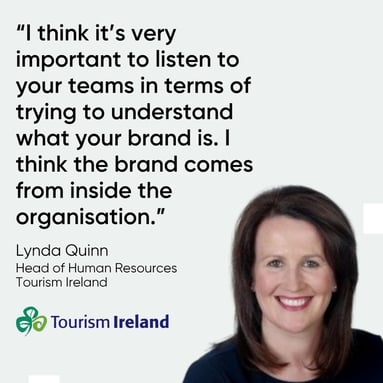
For Tourism Ireland, this also means playing to the strengths it can genuinely offer as an employer. While the organisation may not always be able to compete with larger multinationals on salary, employees have opportunities to learn, develop and collaborate across an international network, with teams working together across markets from Sydney to San Francisco.
The specifics will differ from one workplace to another. The broader lesson is to identify the parts of the employee experience that genuinely distinguish an organisation rather than beginning with what sounds most attractive externally.
Authenticity depends on alignment
A credible employer brand creates an expectation. Once somebody joins the organisation, their everyday experience begins testing that expectation. Do the opportunities discussed during recruitment actually exist? Are the values visible in how decisions are made? Do managers behave in ways that reinforce the culture being promoted? Does the reality of the role resemble the picture candidates were given? Perfect alignment is unlikely. Every organisation has areas that work well and areas that need attention. Authenticity does not require pretending otherwise.
Instead, it requires being realistic about what the organisation can promise and consistent about delivering on it. This is particularly important because employees are not passive recipients of an employer brand. They experience it, interpret it and form their own view of whether it is credible. When there is a significant gap between the external promise and internal reality, that gap will eventually become visible.
An employer brand therefore cannot simply describe the culture an organisation would like to have. It needs to be grounded in the culture employees actually experience.

Listen before deciding what the story is
If employer brand is shaped by employee experience, employees themselves are one of the most useful sources of insight into it. Listening can reveal the aspects of working life that matter to people but may be less visible to those creating the employer brand. It can also challenge assumptions about which parts of the employee proposition are genuinely valued. That means looking beyond a single survey or feedback exercise. Employee listening can take many forms, from formal survey data to focus groups, conversations with managers and feedback on individual programmes.
What matters is what happens afterwards. Employees do not expect every suggestion to result in change. But where feedback identifies something that needs attention, organisations should be willing to examine it, explain what can or cannot change and adjust their approach where appropriate.
That process can also strengthen employer branding. Rather than relying on assumptions about what employees value, organisations can build their story around what their people consistently say matters to them.

Your employer brand has to work for different employees
The employee experience is rarely uniform. People may be working across different countries, locations, departments, career stages and working arrangements. What attracts an early-career employee may be different from what matters to someone with decades of experience. Opportunities available in one team may not exist in exactly the same way elsewhere. That makes employer branding more complicated than finding one message that appeals equally to everyone.
A strong overarching proposition can provide consistency, but organisations also need to understand how that proposition translates across different employee groups. Development is a useful example. For one employee, growth might mean promotion. For another, it could mean developing new skills, working across teams, taking on a different project or gaining exposure to another part of the organisation.
The same principle applies to flexibility, recognition, purpose and belonging. The organisation needs a coherent identity as an employer, but employees should still be able to recognise how that identity relates to their own experience.
Managers make the promise tangible
Employer branding may sit across HR, marketing, communications and talent acquisition, but much of the employee experience is delivered somewhere else entirely: through managers. A manager can influence whether somebody feels informed, supported, recognised and able to develop. They also play an important role in translating organisational priorities into something relevant to an individual's day-to-day work. This means manager capability should not be treated separately from employer brand.
Organisations can invest significantly in defining an employee proposition, but if managers are not equipped to deliver the experience behind it, employees may encounter something very different. Supporting managers therefore matters. This can include leadership development, feedback skills, communication, opportunities for leaders to learn from one another and regular reviews of the capabilities the organisation will need next.
The goal is not to make every manager identical. It is to create enough consistency that employees can recognise the organisation's values regardless of who they report to.
Be willing to change what is not working
Not every people initiative will have the impact an organisation expects. A programme can appear strong on paper and still fail to connect with employees. An initiative that worked several years ago may become less relevant as the organisation changes. Something that succeeds for one group may have limited value for another. The useful question is not whether every initiative was successful. It is whether the organisation is willing to learn from the result.
Evaluation should therefore be part of the process from the beginning. Did people participate? Did the programme address the issue it was intended to solve? What did employees find valuable? What would they change? Those answers can be used to adapt the programme rather than continuing with an approach simply because time or money has already been invested in it.
This becomes increasingly important as workplaces continue to change. New technology, evolving skills requirements and different employee expectations will all affect what people need from their organisations. Employer brands need enough consistency to remain credible, but enough flexibility to evolve alongside the employee experience.
Build the experience before promoting the story
Employer branding matters because people form expectations about an organisation long before their first day of work. But maintaining those expectations depends on what happens after they arrive. The strongest starting point is therefore not a campaign, but understanding the experience that already exists.
Listen to employees. Identify what genuinely differentiates the organisation. Be realistic about areas that need improvement. Equip managers to deliver a consistent experience. Evaluate what is and is not working, and be prepared to adapt. Once those foundations are in place, telling the employer brand story becomes much simpler.
The organisation is no longer trying to create an image of what it is like to work there. It is communicating an experience its employees can already recognise.
Thinking about Great Place to Work Certification™?
Watch our 40-minute live Q&A webinar recording designed for organisations exploring Great Place to Work® Certification for the first time. Learn how the process works, what to expect, and why launching your Trust Index™ survey by November 2026 is key if you're planning your recognition journey.
About Great Place to Work®
Great Place to Work® is the global authority on workplace culture. We help organisations quantify their culture and produce better business results by creating a high-trust work experience for all employees. We recognise Great Place to Work-Certified™ companies and the Best Workplaces™ in more than 60 countries. To join the thousands of companies that have committed to building high-trust company cultures that help them attract, retain and take care of their people, contact us about getting Certified today.




 Blog